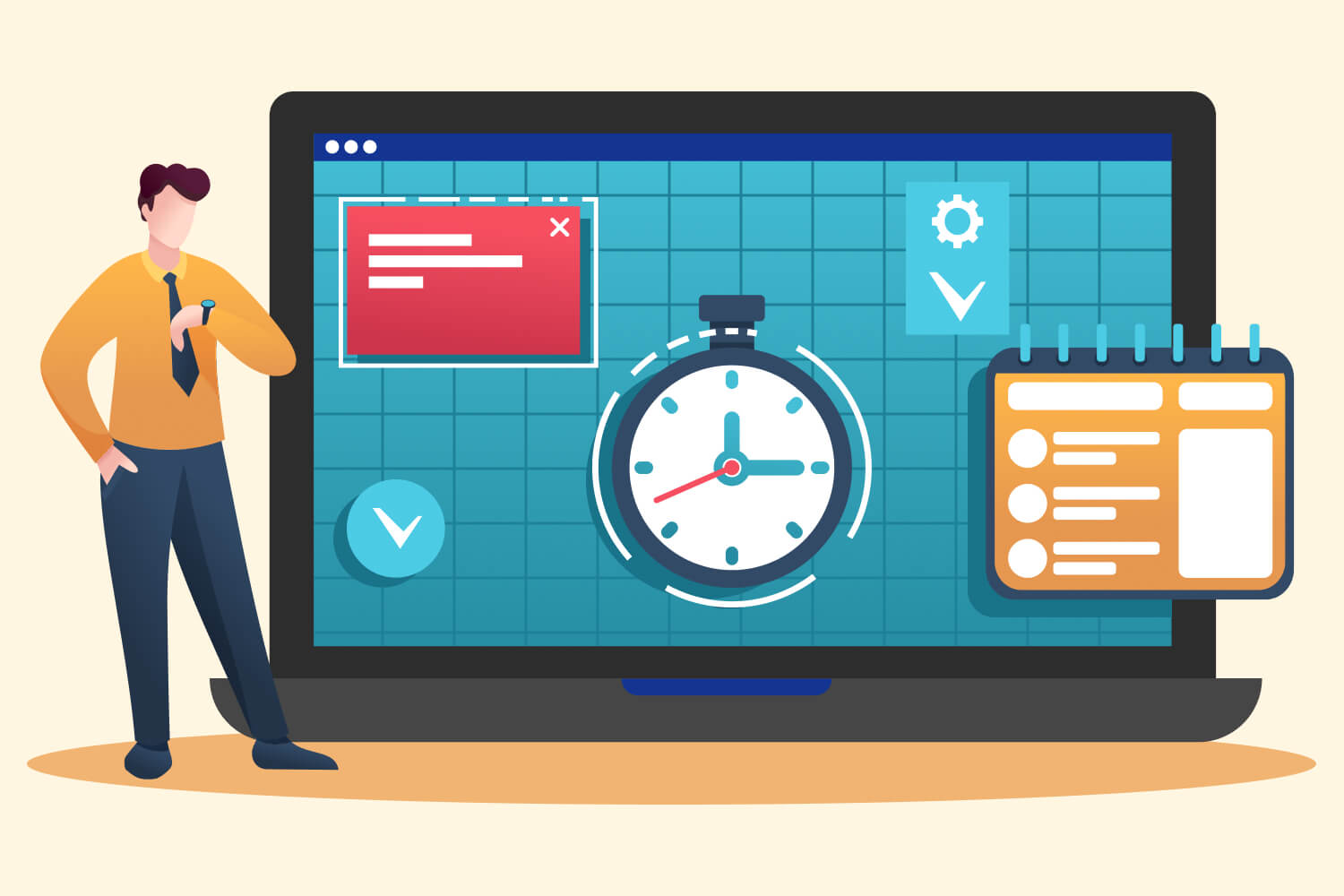
As working from home & flexible hours become the norm, employee time tracking software becomes an invaluable partner in understanding how your employees spend their working hours. Rather than having employees just clock in hours, capture and analyze productivity, app usage, and project updates. Controlio is a great example, balancing tracking and data protection so leaders can make evidence-based decisions that improve efficiency and morale.
If “Could this help my operation?” comes to mind, consider checking out the top 10 workforce productivity suite. Controlio is top ranked, integrating time tracking with monitoring tools to protect sensitive data while enhancing productivity. Whether a high-growth start-up or an established enterprise, adopting these tools can turn your goals and ambitions into success stories.
Employee time tracking software can do many things. At their most basic, time tracking applications give your employees timers, help you with statistics, and help you calculate approximate time spent on each task, in addition to time spent on your data. Once finished, tracking apps follow data to websites, software, and even individual actions.
Being able to see how things evolve and take shape in ‘real time’ is crucial, especially in 2026, as hybrid models continue to transform how we interact and work together.
For remote teams or freelancers who work with many clients, these tools provide accountability and save the hassle associated with creating and maintaining manual time logs. These tools also combine with Data Loss Prevention (DLP) tools to monitor time as well as (and in many circumstances better than) DLP tools monitor security, e.g., the risk of missing file security, unrestricted file sharing, etc. Think of a DLP dashboard that shows who is flying on fast, on-time, and overdue deadlines. That is the example of the best of the best DLP tools and how it integrates with time tracking.
Crucial Distinctions Required Features
Time tracking systems can also guide and monitor the productivity of employees. Here is a list of time tracking systems features that can monitor employee productivity and help manage DLP systems.
- Automated Time Tracking: Records logs, breaks, and overtime and eliminates guesswork on time logs.
- App and Web Usage: Differentiate and identify which apps and websites are the most used and the least productive.
- Scoring Productivity: Score productivity on activities to a predetermined level (high or low) of value to the organization (sales, development, etc.)
- Tasks and Projects Alignment: Connects time to a task so that managers can bill more accurately and plan more effectively.
- Passive Screenshot Options: Some tools include the ability to take screenshots to improve oversight (and without crossing privacy boundaries).
These elements paint the picture of daily operations, helping managers build a more engaged workforce.
Why your business can’t afford to skip it.
Employee time tracking software opens up a ton of benefits. To start, it fosters productivity by exposing time wasters—endless social media scrolling or meetings that don’t need to happen. Employees appreciate this kind of transparency because it fosters self-awareness and better social scrolling habits.
For remote management, time tracking, and report generation, software is a godsend. These tools reduce time theft and overpayments, so they free up funds to invest. Customers are happier because the project timelines are reduced. Employees appreciate time tracking software because it fosters transparency. No more guessing.
Analytics were reviewed and opened on the performance front. When combined with DLP, it provides the layer of compliance needed to prevent data loss in high-sensitivity areas. This is an excellent example of trust through visibility, not suspicion.
Employee time tracking software opens endless benefits. Fosters customers’ happiness by keeping project timelines
Navigating privacy and compliance.
The use of tracking tools creates privacy worries, and in 2026, GDPR and CCPA regulations and ethical use of tracking will need to be in place. The answer is simple: be open and transparent. Tell your team what they monitor. App activity is fair game; personal emails are not.
Get team members’ trust.
Write policies that explain what is good. Use data to promote, not to punish. This also keeps morale up. No one likes being micromanaged. d. d. When used with DLP systems, these tools protect company information and only allow access to users in sensitive fields like healthcare and finance.
Practical Uses For All Industries
There is a lot that employee time tracking software can do. For example, tracking time and attendance is super helpful with remote global teams. They can work and stay in all different time zones. Remote employees can be tracked without having to worry about constant checking. Agencies love tracking time with billing clients and tracking time by campaign.
In IT, time is tracked for sprints and code commits or issue tickets. Customer service teams use it to track how fast they work and to identify areas where they need training. Even in education, time is used to track how students are engaged in online courses.
Choosing Your Team’s Perfect Fit
Choosing the best software depends on your situation. Think about growth—if you double your staff next year, can it keep up?
Look for software that integrates with your tools like Slack or Asana.
It has to be easy to use. If it’s not, staff will keep training on it and won’t adopt it.
Reporting trends are invaluable, especially when they come with customizable dashboards. Make sure the security measures integrate with your DLP, though.
If you are examining options, begin with Controlio, then check Hubstaff and Toggl. G2 is a reputable source for reviews.
Future Trends for Time Tracking Technology: 2026
The future is bristling with technology. Artificial intelligence provides predictive analytics to foresee and avoid delays. No more missed time punches with automated time capture activity sensors.
More comprehensive DLP integrations will blend monitoring and protection. GPS mobile tracking will help field employees. Compliance can be enhanced with privacy-by-design data anonymization. As work processes expand, these capabilities will evolve from basic trackers into smart coaches that support employees’ overall wellness and increased productivity.
Your Time to Act
Time tracking software is a competitive necessity for 2026. It boosts productivity, provides actionable DLP security, and offers valuable data insights. Explore options such as Controlio to see how it integrates into your ecosystem, and you’ll be amazed by the results.